
The safety record, plainly
Mission-Ready Freeze Protection.Every job starts with a job hazard analysis and ends with a debrief. Below is the program behind that — training, hours, and how to check it — the same record an ISNetworld or Avetta reviewer looks at before any of our crews get on your site.
Evaluation, assessment,
preparation, observation
Every project runs on the same four-step approach before a single tool comes out — and it doesn’t stop once the crew is on site. It’s the discipline the whole job runs on, start to finish.
Evaluation
What’s actually on this job before it starts — your site’s own safety program, the permit and lockout/tagout points specific to the panels and lines involved, and what PPE the work calls for.
Assessment
Grading the hazard against the task — energized work, elevated work, confined space — and against who’s on the crew and what’s around them on your site.
Preparation
A job hazard analysis before the first tool comes out: what the job is, what could go wrong, who’s doing what, and what stops the work if something changes.
Observation
A dedicated safety officer watching the work as it happens, not just signing off after — and a debrief that records what actually happened, not what was planned.
The founders brought this rhythm from military service, and it still runs the job: brief, execute, debrief. Every crew briefs before the work, works the plan, and debriefs after — the habit that keeps a job hazard analysis honest instead of paperwork.
Five things we hold
every job to
Not a poster in the break room — the standard the safety officer, the crew leads, and John hold every job to, the same on a routine repair as on a five-trade turnkey.
Safety
Zero harm to our people and the places we work — the standard every job is measured against, not an aspiration.
People
Long-term relationships with our crews, clients, and suppliers — the kind that let a repeat client ask for the same team by name.
Client
Honest communication and reliable follow-through — the fundamentals a working relationship is actually built on.
Innovation
A direct response to what your site actually needs — new methods, new equipment, whatever the job calls for.
Accountability
We own the outcome together, not just the scope — on every job, every time.
Logged, not
estimated
195,000-plus safe work hours without a recordable incident isn’t a rounded number — it’s a running hours log and OSHA 300 log, the same documents an ISNetworld or Avetta reviewer checks before a quote ever goes out.
A test record on one of our circuits carries an as-found reading and an as-left reading, because a record that shows only one of the two tells half the story. The safety log works the same way: every hour on a job site gets counted, every incident — there have been zero since founding — gets a report, and the total above is a sum of the log, not a projection from headcount.
Source: internal hours log and OSHA 300 log, maintained current and provided on request to prequalification reviewers.
What each crew
member carries
The certifications behind the OSHA 30 stat above, by task — not a general safety statement. Cards and records are named per employee and provided on request.
| Credential | Covers | Verified through |
|---|---|---|
| OSHA 10 & 30 | General industry and construction safety — 30-hour for all field supervisors | Cards, per employee |
| NFPA 70E | Arc-flash hazard — energized panel work, PPE category, approach boundaries | Training records |
| Fall protection | Work at height — harness, anchor points, ladder and lift setup | Training records |
| Aerial lift | Boom and scissor lift operation | Operator cards |
| Forklift | Powered industrial truck operation | Operator cards |
| CPR / First Aid | Crew-wide, current certification | Certification cards |
| TWIC | Badged field crews for port and secured-site mobilization | Badge status, per site |
| Scaffold competent-person | Named individuals qualified to inspect and authorize scaffold use | Certification on file |
Scroll table →
Coverage reflects current company training records. Site-specific requirements — badge, orientation, an additional permit your facility runs — are confirmed per site, before mobilization.
Check it
yourself
Everything on this page is meant to be checked, not taken on faith. Three paths cover most prequalification gates — if your reviewer needs something that isn’t listed here, ask; it either exists or we’ll tell you it doesn’t.
A safety page with no way to check it. A claim you can’t verify isn’t a credential — it’s a sentence. Every item above is something your ISNetworld or Avetta reviewer, or you directly, can confirm without taking our word for it.
What the program
looks like on site
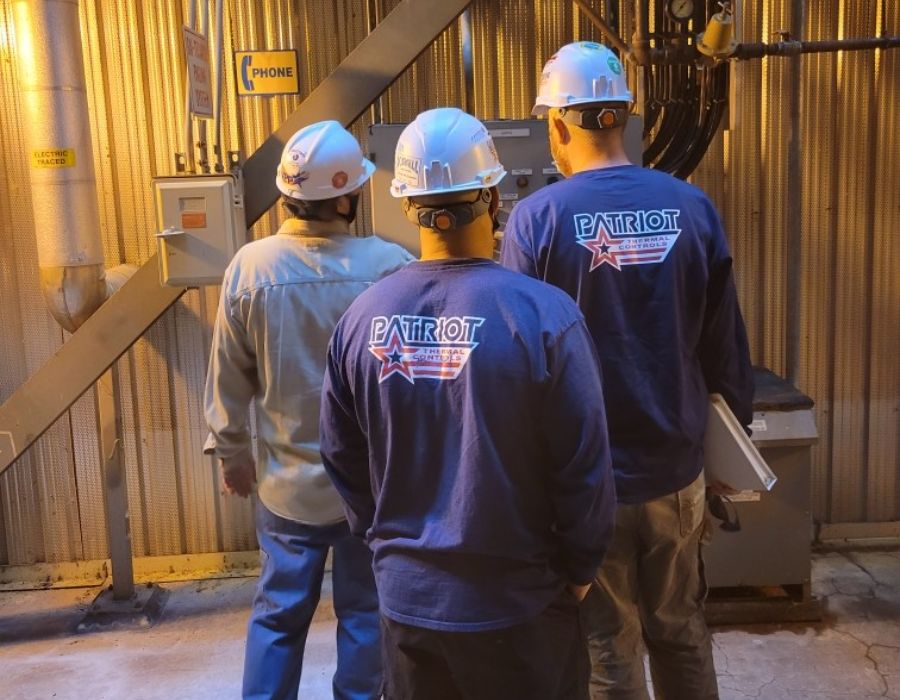
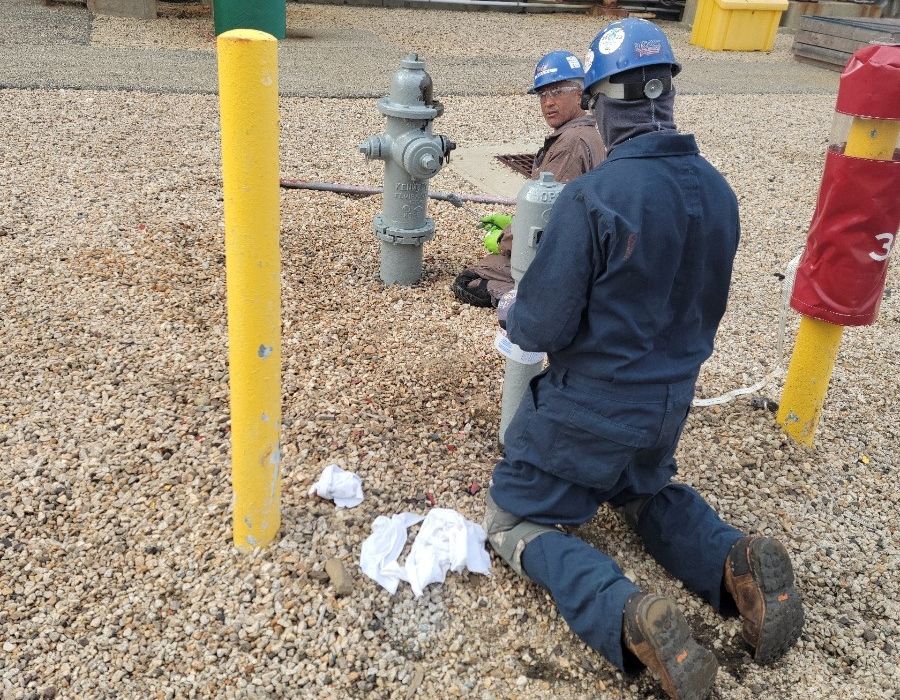
Four moments from real jobs at Northeast facilities — the PPE, the pace, and the habits above, at work.


Asked plainly
Can we get your OSHA 300 logs and training records for our prequalification review?
Are your crews trained for the specific hazards on our site, or just general OSHA requirements?
What happens if a crew member sees an unsafe condition mid-task?
Does Patriot carry its own safety officer, or rely on the site’s program?
Ask your reviewer
what’s still missing
ISNetworld, Avetta, or your own site-safety program — whatever your gate runs on, the training records, hours log, and credentials above back it up. If something on your checklist isn’t here, ask. It either exists or we’ll say so.
A summary of Patriot Thermal Controls’ current safety program and training records — not a substitute for the certificates, cards, and log excerpts a prequalification reviewer will ask to see directly. Coverage updates as certifications renew; request current copies for your file.